

In January 2025, the Wells Fargo Innovation Incubator (IN2) chose seven winners for its ninth Channel Partner Strategic Awards cycle. The funding provided from this award addresses commercialization gaps for energy startups through action-oriented initiatives, regional collaboration, and knowledge sharing.
Many awardees focused on creating partnerships and pilot opportunities by connecting startups with new markets and resources. Here is the story of how one awarded team is working to strengthen the energy-tech ecosystem in their region.
Energy innovation doesn’t stop at state lines. That’s the idea behind the project partnership between the Spark Innovation Center (Spark) in Tennessee and the Dominion Energy Innovation Center (DEIC) in Virginia, two organizations that have joined forces to strengthen the energy startup pipeline across the Appalachian region with funding from an IN2 Channel Partner Strategic Award.
“By taking an interstate approach, we know that we can collaboratively lift up our region and share resources to make an epicenter for energy innovation,” said Lilly Tench, executive director of Spark.
Spark, housed at the University of Tennessee Research Park in Knoxville, Tennessee, runs a startup incubator that provides lab space and mentorship, as well as an accelerator program that provides a structured 12-week experience to help entrepreneurs refine their businesses. Spark works closely with the Tennessee Valley Authority, giving entrepreneurs access to the nation’s largest public utility. In Virginia, DEIC partners with utility Dominion Energy and other stakeholders to guide startups from the lab to pilot projects, industry partnerships, and even utility-scale deployment.
“By bringing together our regional networks, including two of the nation’s leading utilities, we’re able to help startups fill gaps for pilots and early-stage deployment,” said Braden Croy, program director at DEIC.
Although just given the IN2 award in January 2025, these two organizations have already begun integrating their pipelines. Applicants to each program are now reviewed collaboratively, ensuring promising entrepreneurs can find support no matter which door they enter. And entrepreneurs who complete Spark’s accelerator will be well positioned for the opportunity to advance into DEIC’s deployment-focused programs.
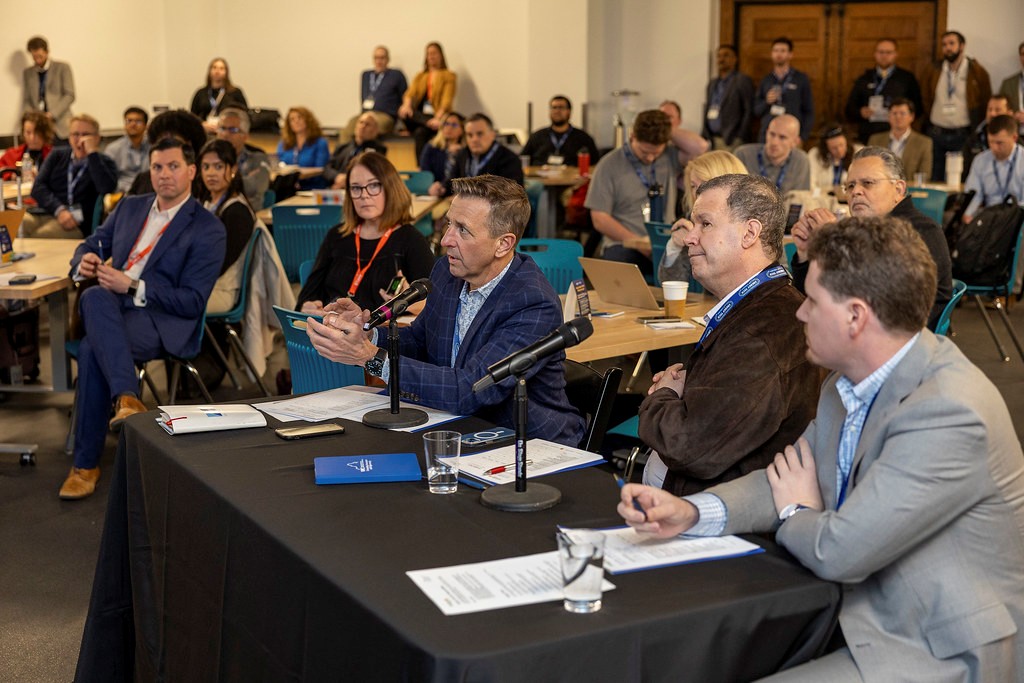
The IN2 award is also fueling two joint events. In November 2025, Spark hosted its annual “Demo Day” alongside the Tennessee Advanced Energy Business Council’s 2025 Opportunities in Energy conference, where a dozen companies pitched their energy solutions. DEIC entrepreneurs and representatives attended, followed by a joint workshop on working with utilities and local site tours.
Then, in March 2026, DEIC will expand its annual Energy Tech conference in Richmond by adding a second day devoted to startups. Spark entrepreneurs and representatives will participate in hands-on sessions with utilities, vendors, and regulators, deepening industry connections and accelerating commercialization opportunities in the region.
Both DEIC and Spark see these joint events not as one-offs but as the beginning of a lasting interstate coalition. The goal is to continue building opportunities for entrepreneurs to access customers, test technologies, and learn from real-world utility environments.
That mission is also personal for both organizations.
“This collaboration supports the kind of innovation that tackles really hard problems,” Tench said. “But entrepreneurs see problems as opportunities, and they’re willing to take big risks to create jobs and uplift communities. For me, growing up in Appalachia, it’s especially meaningful to help build a positive economy for the region.”
Croy added: “Society is energy and energy is society. By working with entrepreneurs who are at the cutting edge of energy, whether in software, hardware, or grid cybersecurity, we’re preparing our society and economies for the future. And that makes this work rewarding every day.”
With support from the IN2 Channel Partner Strategic Award, Spark and DEIC are proving that collaboration can accelerate innovation beyond what a single organization—or a single state—can achieve alone. As Tench put it: “Working together, we can make a stronger impact.”
Comments are closed.